The Smoke Signal — Stafford High School — Volume 63, Issue 4, Page 8
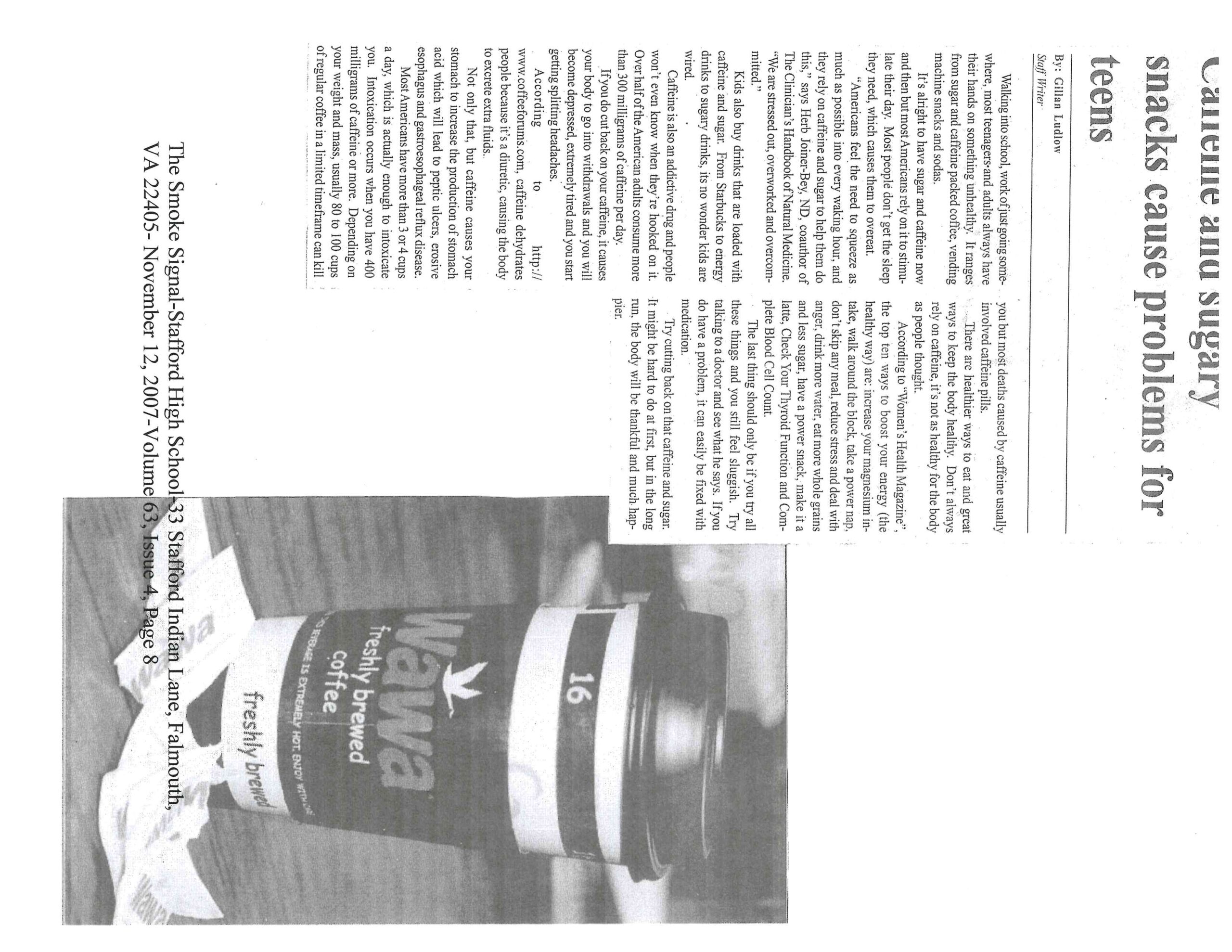
It’s 7:30 in the morning and students shuffle into class, eyes barely open, clutching a can of Mountain Dew or Red Bull. For many high school students, caffeine has become a daily crutch — one that doctors and nutritionists warn can be genuinely dangerous.
Caffeine addiction among teenagers is a growing problem. While the substance is legal and widely available, its effects on developing bodies can be severe. Teens who consume large amounts of caffeine regularly can experience withdrawal symptoms including headaches, irritability, and fatigue when they stop or cut back.
The problem doesn’t stop with caffeine. Sugary snacks and energy drinks — often consumed together — cause blood sugar spikes followed by crashes that leave students unable to concentrate. Teachers report that students in afternoon classes are often visibly sluggish, a pattern that correlates with a heavy-sugar lunch.
“I can tell right away which students have had a lot of sugar or caffeine,” said one Stafford teacher who asked not to be named. “They start off hyper and then they just crash.”
Nutritionists recommend that teenagers limit caffeine to no more than 100 milligrams per day — roughly the amount in one small cup of coffee. A single energy drink, by comparison, can contain 150 to 200 milligrams.
For students looking to break the cycle, experts suggest gradually reducing caffeine intake rather than quitting cold turkey, and replacing sugary snacks with protein-rich foods that provide sustained energy throughout the day.
“It’s hard to change habits, especially when everyone around you is doing the same thing,” said junior Megan Davis. “But when I started eating better, I actually felt more awake in class.”